Center for Open Neuroscience
The Center for Open Neuroscience brings open practices into the everyday work of neuroscience. We build, connect, test, document, and share the tools and infrastructure that help researchers work transparently and reproducibly.
Our principles #
Open source #
Open source supports collaboration at scale and makes scientific work easier to inspect, verify, and reproduce. CON also helps scientific developers make informed choices about licensing and sustainable development practices.
Re-use and integration #
Research communities already produce powerful software and valuable data. Before inventing another solution, we look for ways to improve, connect, and reuse what exists.
Dissemination #
Scientific projects rarely have dedicated resources for promotion or reliable distribution. We help share software, data, and documentation while paying attention to intellectual property and due acknowledgment.
Quality assurance #
Research software deserves the same care as other scientific instruments. We work on unit, regression, integration, and validity testing so that reproducible workflows also produce trustworthy results.
Convenience #
Open resources can have broad impact only when people can obtain and use them. We work to make software and data accessible without hiding their provenance or the complexity needed to manage them responsibly.
Community #
Neuroscience spans many disciplines, yet projects can still develop in isolation. CON participates in cross-community initiatives and helps build bridges among research groups.
Explore CON projects or meet the people behind them.
Background reading #
- Open and reproducible neuroimaging: from study inception to publication
- Four aspects to make science open “by design” and not as an after-thought
- Open is not enough. Let’s take the next step: an integrated, community-driven computing platform for neuroscience
Engage #
Contribute #
CON is an open community. You are welcome to build, document, test, teach, or use any of our projects, whether or not you are looking for a formal position.
Start with the DataLad project, browse the full catalogue, or contact the team to discuss where your experience could help.
Promote #
Scientific software projects rarely have dedicated resources for community outreach. The following CON materials are available for exhibits, bulletin boards, teaching, and conversations about open neuroscience. Follow each pamphlet image to its printable PDF where available.
Pamphlet collation #
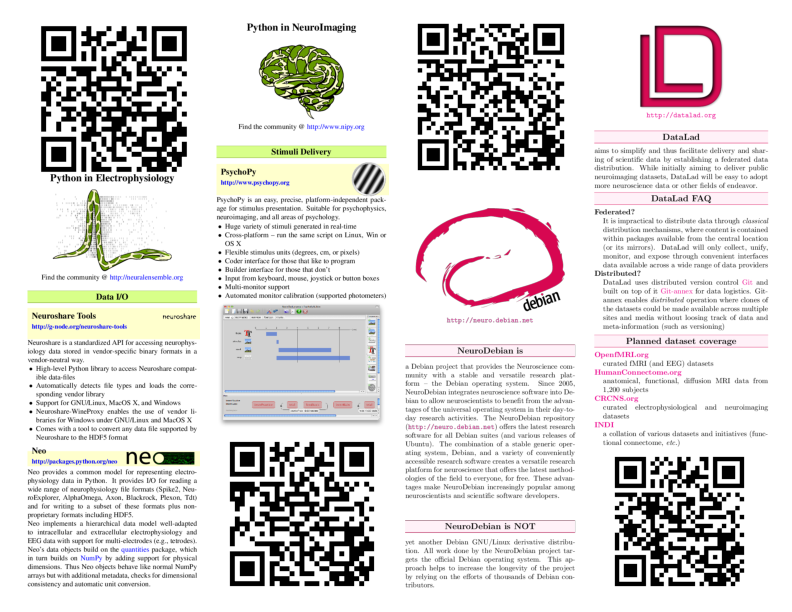
A single-page collection of QR codes for the pamphlets below.
Python in electrophysiology #
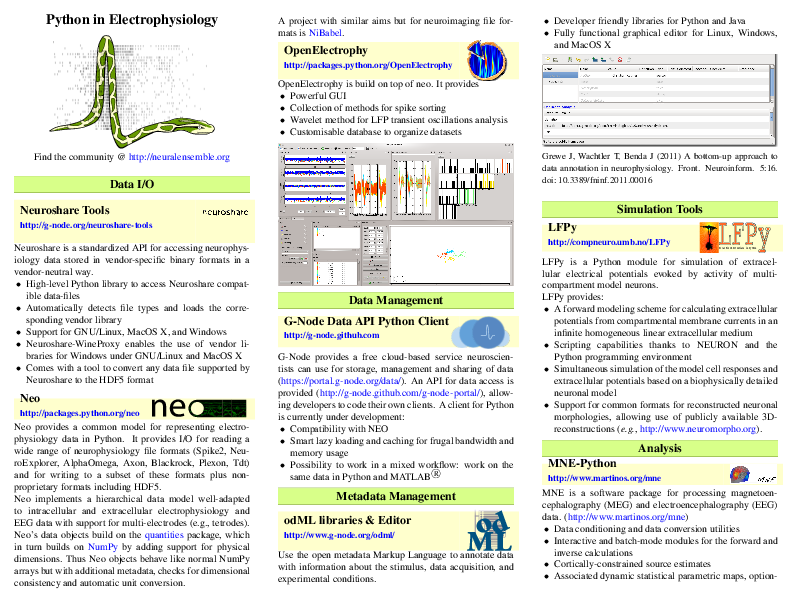
A double-sided introduction to Python-based projects for electrophysiology. The artwork sources are public.
Python in neuroimaging #
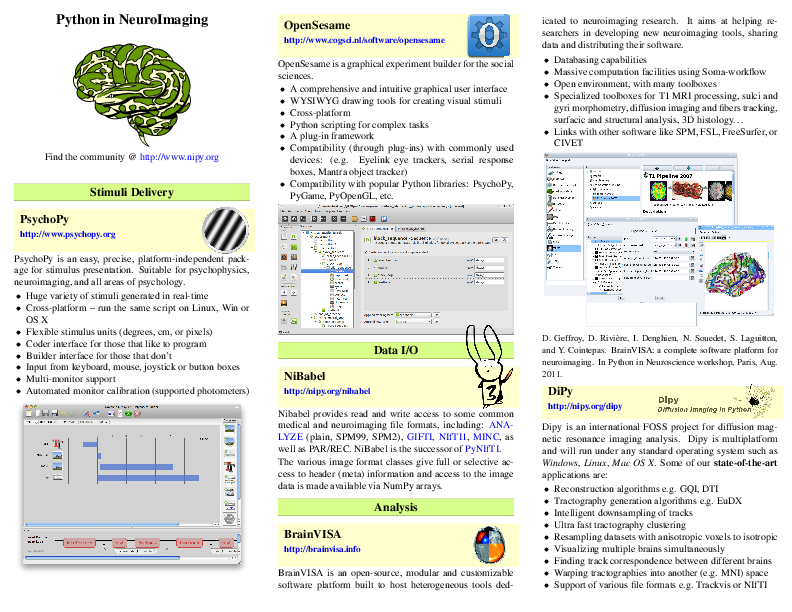
A double-sided introduction to Python-based projects for neuroimaging. The artwork sources are public.
Debian and NeuroDebian #
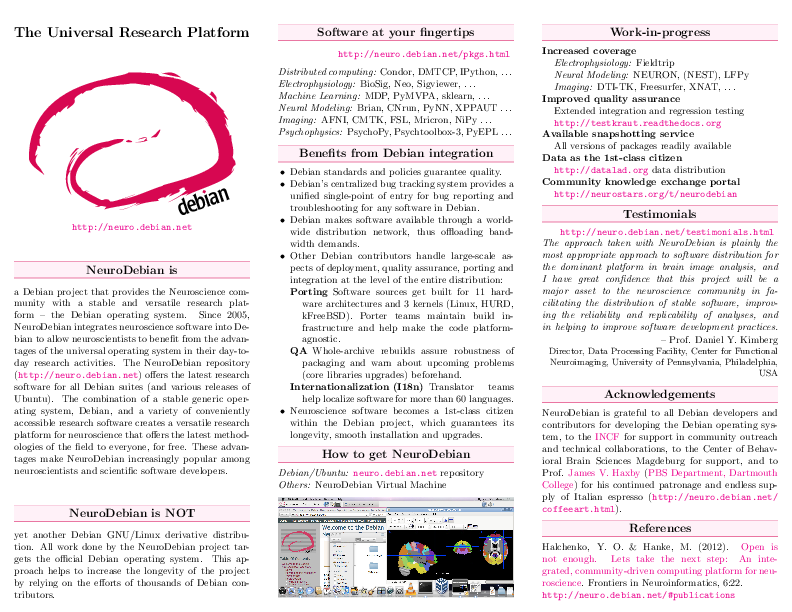
This pamphlet introduces Debian and the NeuroDebian project. Its artwork sources are public.
git-annex and DataLad #
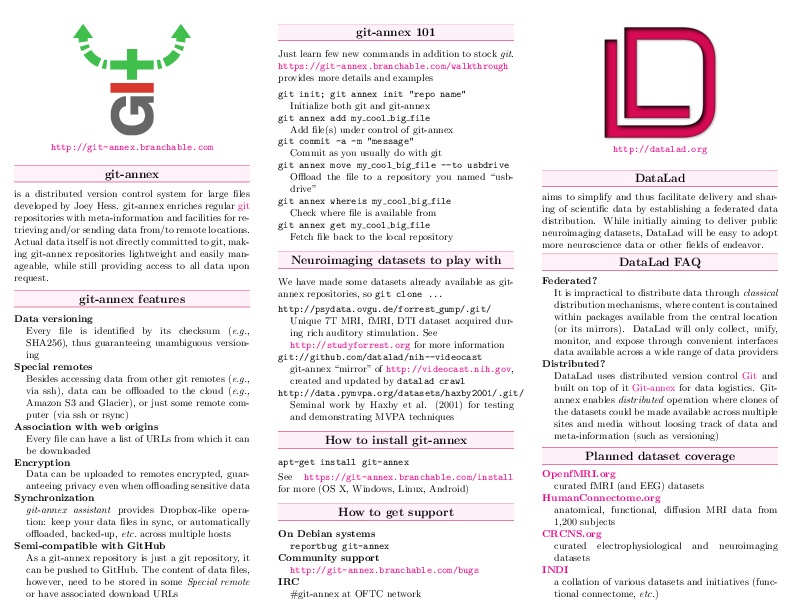
A double-sided introduction to DataLad and git-annex. The artwork sources are public.


BIDS #
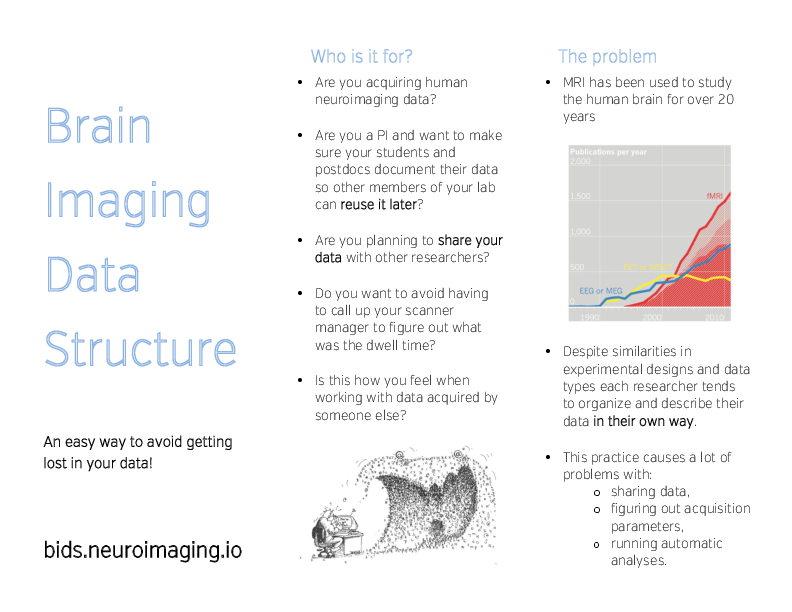
This pamphlet introduces the Brain Imaging Data Structure, a standardized layout that helps researchers reuse methods and share neuroimaging data.
Support #
CON has received institutional and grant support from the organizations below. These acknowledgments describe past support, not current award periods.
Center for Cognitive Neuroscience #

National Science Foundation #

National Institutes of Health #

Support helps CON maintain open software, data services, documentation, and community infrastructure. Contact the team to discuss sponsorship or other forms of support.